Roll-Up vs Tri-Fold Tonneau Cover: Pick by Use (October 2026)
For a roll up vs tri fold tonneau cover, choose roll-up for frequent bulky loads and tri-fold for quick access near the tailgate. Check where the open cover rests before deciding.
On this page (8 sections)
- Roll-up vs tri-fold tonneau cover: which gives better access?
- Which cover is easier to open and secure?
- Do roll-up and tri-fold covers fit the same trucks?
- Which is easier to install?
- Which soft cover should you choose?
- How do weather protection and care compare?
- What mistakes should you avoid before ordering?
- Roll-up vs tri-fold tonneau cover: what is the decision rule?
Choose a roll-up for frequent bulky loads or a tri-fold for quick access near the tailgate. The useful difference in a roll up vs tri fold tonneau cover is how you uncover the bed and where the open cover takes up space.
A roll-up gathers flexible material toward the cab. A tri-fold stacks sections over one another, which suits grabbing bags or tools without opening the whole covered area.
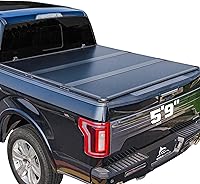
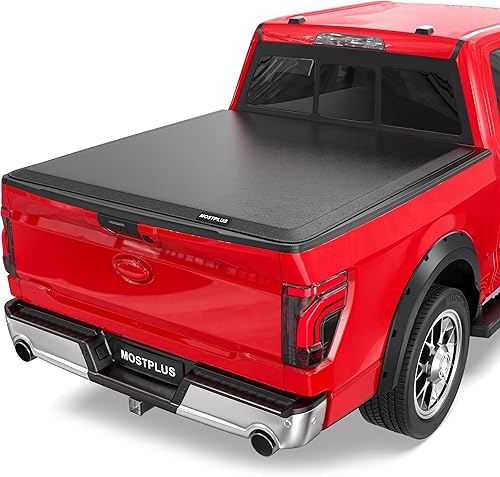
The 3 examples below are soft covers for specified F-150 short beds. They help compare the layouts, but your truck's fit and cargo clearance decide which one belongs on your bed.

Roll-up vs tri-fold tonneau cover: which gives better access?
A roll-up generally suits large loads, while a tri-fold suits opening the rear part of the bed in sections. Neither style guarantees a completely clear bed opening.
Think about the largest item you carry each month, not just grocery bags. A mower, cabinet or bicycle may need space that an open cover, rail or folded stack still occupies.
The key measurements are cargo height near the cab, width at the rails and the opening needed to lower an item into the bed. Floor space alone won't answer those questions.
When does a roll-up tonneau cover make more sense?
Choose a roll-up if you often need to expose most of the bed and prefer moving a flexible cover toward the cab. The rolled bundle can leave a useful loading area without a stack of folding sections extending rearward.
That bundle still needs room, and the rails remain in place. Skip this layout if tall cargo must sit tight against the bulkhead and the roll would interfere.
Also consider your reach. Rolling the material evenly and fastening both sides should feel manageable from beside your truck, especially if you open it several times a day.
When is a tri-fold more practical?
Choose a tri-fold if you usually load through the tailgate and only need to uncover part of the bed. Folding sections make sense for bags, coolers and tools that stay within the rear loading area.
For tall cargo farther forward, check whether the cover can stay mounted or must come off. “Full bed access” does not by itself describe the space occupied by the open cover or its approved travel positions.
If you want more folding options, see our guide to the best tri-fold tonneau covers. Compare open positions as closely as closed dimensions.
Which cover is easier to open and secure?
The easier cover is the one you can reach and fasten comfortably from beside your truck. Folding takes fewer large movements, while rolling requires keeping flexible material reasonably even as you move it forward.
For daily errands, picture opening the cover with the bed already partly loaded. Cargo piled against the underside can block folding sections or make a roll difficult to start.
A lifted truck or deep bed can make reaching forward awkward with either style. Don't assume a cover that looks simple on a low truck will suit your working height.
Tyger permits driving with the T3 folded and secured with its built-in straps. Follow its fastening instructions, and don't extend that permission to either MOSTPLUS cover.
Before each trip with a cover open, check every required retainer. A loose folded section or unsecured roll should be corrected before the truck moves.
Keep cargo tied down separately. A closed tonneau is a cover, not a restraint for tools, lumber or other items that can shift during braking.
Do roll-up and tri-fold covers fit the same trucks?
Fit depends on the exact model year, bed length and bed style, not on the opening style. Two covers described as fitting an F-150 short bed can have different limits.
The MOSTPLUS roll-up fits 2009–2026 F-150 5.5 ft Fleetside beds. The Tyger T3 fits 2021–2026 F-150 and 2022–2026 Lightning trucks with a 5.5 ft bed.
The MOSTPLUS tri-fold needs an extra check: its title extends through 2026, while its fitment bullet stops at 2022. Confirm the year with MOSTPLUS before ordering; both descriptions identify a 5.5 ft Styleside bed.
Measure inside the bed from the bulkhead to the tailgate rather than using the truck's overall length. Our guide on how to measure your truck bed walks through the fit checks.
Record the liner type and any accessories attached to the rails. A correct length does not guarantee that clamps can reach their mounting surfaces.
If you have a toolbox, check both mounting clearance and the cover's opening path. The toolbox fit guide explains why a box near the cab can change your options.
Which is easier to install?
Both the MOSTPLUS roll-up and Tyger T3 offer no-drill installation, but the liner can add work. Judge the setup by rail alignment, clamp access and seal placement rather than the style name alone.
The MOSTPLUS roll-up includes side rails, clamps, weather stripping and an installation manual. MOSTPLUS specifies installation without drilling or further modification.
The T3 has pre-assembled crossbars and includes mounting hardware. Tyger requires small holes in over-the-bedrail liners at the clamp areas; under-the-bedrail liners work without modification.
No-drill installation therefore does not always mean an untouched liner. Inspect yours before starting so the need for clearance cuts does not become a surprise halfway through.
Start with clean rail surfaces, then position the cover according to its instructions before final tightening. Uneven rails or a crooked frame can make closure harder and leave gaps at the edges.
Use the required clamp positions and tightening method. Extra force is not a substitute for correct placement, and clamps should not pinch wiring or bear against an unsuitable liner edge.
Close the cover and tailgate in the order the instructions specify. Check alignment and latch engagement before loading the bed or heading out.
Our clamp-on tonneau cover installation guide explains the usual setup steps. If you're replacing a cover, see how to remove a tonneau cover before fitting another one.
Which soft cover should you choose?
Choose the MOSTPLUS roll-up for frequent large loads, the Tyger T3 for folding access on a compatible newer truck, or the MOSTPLUS tri-fold for occasional opening after confirming fit. Their strengths serve different routines.
MOSTPLUS roll-up: for regularly uncovering the bed
The MOSTPLUS roll-up suits a driver who often switches from covered storage to carrying bulky items. Its flexible tarp and aluminum frame make it a straightforward example of the rolling layout.
It also includes a built-in LED light, which can help you see into a covered bed. MOSTPLUS provides a 1-year warranty.
Skip it if you want a rigid surface or stronger resistance to cutting. Also rule it out if the rolled position conflicts with the space your cargo needs near the cab.
Tyger T3: for newer F-150 and Lightning drivers
The T3 suits drivers who want supported folding sections and a defined way to secure the cover open for travel. Its crossbars fold with the cover, so they move together during opening.
It uses dual-coated 24 oz marine-grade vinyl, aluminum frames and stainless steel clamps. Tyger provides a 5-year warranty for US customers.
Skip it if you won't make the required clearance cuts in an over-rail liner. For oversized cargo, confirm the cover's open position and removal steps before choosing it over a roll-up.
MOSTPLUS tri-fold: for mostly covered use
The MOSTPLUS tri-fold suits a compatible Styleside owner who mostly keeps the bed covered and occasionally folds it back for cargo. Its soft vinyl construction meets that basic use without moving you into a hard-panel design.
Resolve the model-year conflict before committing to this option. If you need clear guidance for driving with it open or removing it frequently, get those instructions from MOSTPLUS first.
Skip it when that fit question remains unresolved. A lower-scored alternative is only useful if it actually matches the truck and loading routine.
If security is your main reason for buying, compare soft vs hard tonneau covers. All 3 options here use soft vinyl, which can conceal cargo but offers less resistance to cutting than rigid panels.
For another truck-specific starting point, use our F-150 tonneau cover fit guide. Match the exact bed configuration before narrowing the choice by brand.
How do weather protection and care compare?
Seal fit matters more than rolling versus folding for keeping rain out. Water can enter around corners, rail joints or the tailgate even when the top material sheds it.
MOSTPLUS describes its roll-up as waterproof and UV resistant. Tyger says the T3's vinyl top and perimeter seals help block rain, snow and dust.
Those claims do not make every installed truck bed dry in every condition. Use sealed bins for items that cannot get damp, especially papers, electronics and clothing.
Our guide to whether tonneau covers are waterproof explains the difference between a weather-resistant top and a fully sealed cargo space.
Clean grit from the cover before opening it. Dirt rolled between layers can rub against the surface, while debris around folding joints can interfere with smooth movement.
MOSTPLUS permits soap-and-water cleaning for its roll-up. For any cover, follow the brand's cleaner guidance and avoid solvents or dressings unless they are approved for that material.
Let a wet cover dry before leaving it rolled or folded for a long period. Clear loose snow before opening, and free frozen seals gently rather than pulling harder on the material.
Check clamps, retainers and seals after installation and at the intervals in the instructions. Address a shifted rail or loose fastener before it becomes a closure or water-entry problem.
What mistakes should you avoid before ordering?
Don't choose by the closed appearance alone. A cover can look right on the truck and still make your normal loading routine harder.
- Confusing folding style with material. A tri-fold can be soft or hard; the 2 tri-folds here are soft vinyl.
- Assuming the open bed is completely clear. Account for rails, rolled material and folded sections where your cargo will sit.
- Ignoring removal and storage. If oversized loads require taking the cover off, plan where you'll place it without bending the frame or dragging the vinyl.
- Treating the cover as a shelf. Do not place weight on a soft cover unless its instructions explicitly allow it.
- Buying for fuel savings alone. Choose for cargo access and coverage rather than assuming the opening style will repay its cost through lower fuel use.
If these tradeoffs point away from both styles, our tonneau cover types and choosing guide explains the broader options. A different design may suit your cargo better than forcing either soft layout to work.
Roll-up vs tri-fold tonneau cover: what is the decision rule?
Choose a roll-up when bulky loads often need most of the opening, and choose a tri-fold when routine access stays near the tailgate. Then check that the open cover clears your largest cargo and has a secure travel position for your use.
For these examples, the MOSTPLUS roll-up serves the frequent-loading buyer, while the Tyger T3 gives compatible newer-truck owners folding sections with approved strapped-open travel. Consider the MOSTPLUS tri-fold only after its model-year fit is settled.
Your final roll up vs tri fold tonneau cover choice should pass 3 checks: correct fit, workable cargo clearance and a fastening routine you'll follow every time. Use the F-150 cover fit guide to confirm the truck details before ordering.
Frequently asked questions
Is a roll-up or tri-fold tonneau cover easier to use?
A tri-fold usually suits quick access near the tailgate, while a roll-up suits opening most of the covered area for larger loads. Your reach and the fastening steps matter too.
Compare where each cover rests when open, and make sure you can secure it without leaning awkwardly across the bed.
Can you drive with a tri-fold tonneau cover folded?
Tyger permits driving with the T3 folded when its panels are secured with the built-in straps. Fasten it exactly as Tyger directs before moving the truck.
That permission does not establish an approved travel position for either MOSTPLUS cover; use the instructions supplied with your exact model.
Does a roll-up tonneau cover give full bed access?
A roll-up generally clears most of the covered area, but its rolled bundle and mounting rails still occupy space. That matters for tall cargo near the cab and wide items at rail height.
Check the approved open position and compare it with your load before assuming the whole bed is clear.
Will either cover fit any F-150 bed?
No. These covers fit specified 5.5 ft beds, with different model-year and bed-style requirements.
Measure the inside bed length from the bulkhead to the tailgate, then confirm the truck configuration and liner clearance.
Cab size alone does not establish fit, and an F-150 badge does not identify the correct bed.
Should I choose a roll-up or tri-fold for a toolbox?
Choose a cover only after confirming that its mounting points and opening path clear your toolbox. A box near the cab can interfere with a rolled bundle or folded sections, even when bed length matches.
Our tonneau cover with a toolbox guide explains the measurements to check before ordering.